

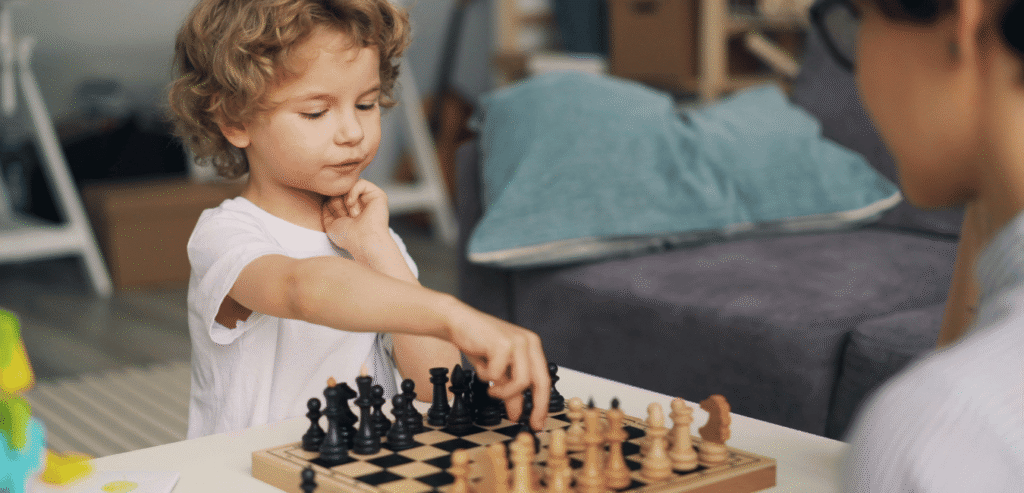
Chess has long been celebrated for its cognitive benefits, but there’s another dimension that’s equally important for young minds: emotional intelligence. At Premier Chess Coaching, we believe that chess can be a profound tool in nurturing emotional growth in children. But how exactly does a board game with knights and pawns help your child understand their emotions and those of others? Let’s explore this fascinating connection.
Understanding Emotional Intelligence
Emotional intelligence (EI) refers to the ability to recognize, understand, and manage our own emotions as well as the emotions of others. For children, developing EI is crucial as it influences their social interactions, empathy, and decision-making skills. Chess, by its nature, creates a unique environment where these skills can flourish.
Consider a typical chess game. Players must anticipate their opponent’s moves, a skill that requires empathy and understanding of another’s perspective. This process mirrors real-life situations where children must navigate social cues and responses.
Teaching Patience and Self-Regulation
One of the immediate lessons chess imparts is patience. Waiting for an opponent to make their move can teach children the importance of patience and self-control. In a world where everything seems to be available at the touch of a button, learning to wait is invaluable.
For instance, a young student might face a tough decision on the board. Initially wanting to make a hasty move, they learn through coaching to pause and consider their options. This not only improves their chess strategy but also teaches the value of thinking before acting – a skill that translates into everyday life.
Building Resilience and Coping with Loss
Every chess match ends with a winner and a loser, and dealing with loss gracefully is a part of the learning process. Chess provides a safe space for children to experience failure and develop resilience. Losing a game can be disappointing, but it’s also an opportunity to learn and improve.
Students are encouraged to reflect on their losses. What went wrong? What could they do differently next time? This reflection helps students to develop a growth mindset, where challenges are seen as opportunities rather than setbacks.
Enhancing Problem-Solving Skills
Chess is essentially a series of problems to be solved, each requiring focus and strategy. As children engage with the game, they learn to approach problems methodically, considering various outcomes and planning several moves ahead. This kind of strategic thinking fosters a mindset that is both analytical and emotionally aware.
Imagine a child faced with a complex chess puzzle. They must weigh their options, predict the opponent’s response, and decide on the best course of action. This mirrors the kind of critical thinking required in real-life scenarios, where emotions and logic must work hand in hand.
Fostering Social Skills Through Chess Clubs
Chess is not just a solitary activity; it’s a social one too. Chess clubs provide children with the chance to interact, share strategies, and learn from peers. These interactions are a perfect ground for developing social skills such as communication, cooperation, and respect.
In our coaching environment, children often help each other understand different strategies, fostering a sense of community and teamwork. This kind of peer learning enhances their ability to work with others, a crucial aspect of emotional intelligence.
The Takeaway
Chess is more than a game of strategy; it’s a playground for emotional development. By engaging in chess, children not only enhance their cognitive abilities but also build emotional intelligence that benefits them in all areas of life. At Premier Chess Coaching, we see these transformations every day, as young players learn to understand themselves better and interact more effectively with those around them. Encourage your child to take up chess and watch as they grow both as a player and a person.
FAQs
Q: How does chess help in developing emotional intelligence?
A: Chess helps develop emotional intelligence by teaching patience, self-regulation, and resilience. It encourages children to anticipate others’ moves, fostering empathy and social skills.
Q: Can chess improve my child’s social skills?
A: Yes, participating in chess clubs or classes promotes social interaction, teamwork, and communication, all of which are essential components of emotional intelligence.
Q: What age is suitable for a child to start learning chess?
A: Children as young as 5 can start learning chess. Early exposure helps in gradually developing cognitive and emotional skills through engaging and age-appropriate methods.