
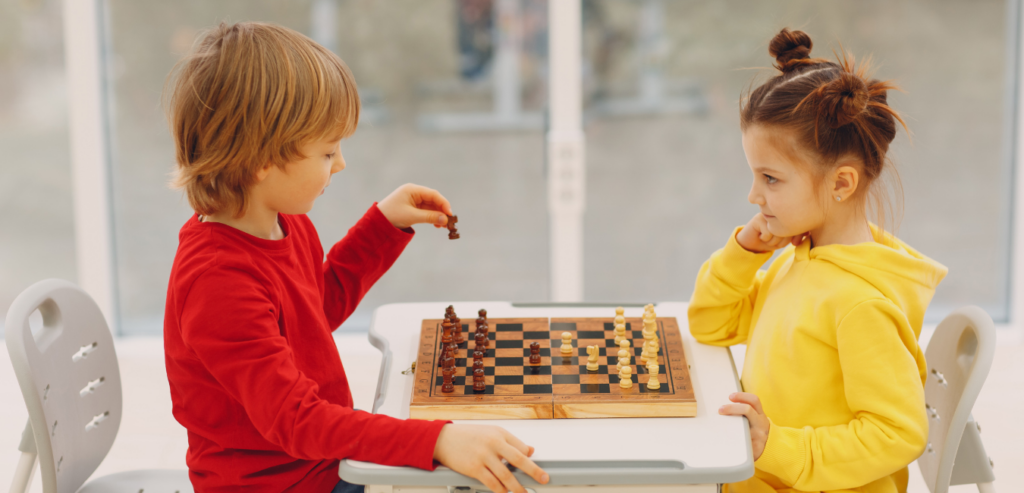
Imagine a classroom where children are not just memorising facts but actively engaging their minds in strategic thinking. Chess, often seen as a game of intellect and strategy, offers precisely that opportunity. As children learn to play chess, they also develop essential critical thinking skills. Every move in chess involves analysing the board, predicting outcomes, and making decisions – all fundamental aspects of critical thinking.
Chess requires players to think several steps ahead, considering both their actions and potential responses from their opponent. This process mirrors real-life decision-making, where anticipating consequences can be crucial. By practising these skills in a game setting, children gradually build a strong foundation for complex problem-solving.
The Role of Chess Coaching in Skill Development
While chess itself is a powerful tool, structured chess coaching can amplify its benefits. A skilled coach guides children beyond the basics, introducing them to advanced strategies and fostering a deeper understanding of the game. Through regular coaching sessions, children learn to recognise patterns, adjust their tactics, and refine their decision-making processes.
Consider a scenario where a young player faces a challenging opponent in a school tournament. With the guidance of a coach, the child learns to remain calm, assess the situation, and adapt their strategy. This experience not only enhances their chess skills but also builds resilience and confidence – qualities that are transferable to academic and personal challenges.
Real-Life Benefits of Critical Thinking
The critical thinking skills honed through chess coaching extend far beyond the chessboard. In educational settings, these skills translate to improved performance in subjects like mathematics and science, where problem-solving is key. Children who engage in chess tend to approach complex tasks with a systematic and analytical mindset, often leading to better academic results.
Moreover, the ability to think critically is invaluable in everyday life. Whether it’s making informed decisions, resolving conflicts, or evaluating information, these skills empower children to navigate a rapidly changing world with confidence and clarity.
Chess Coaching: More Than Just a Game
At Premier Chess Coaching, we believe that chess is more than just a game- it’s a journey of intellectual growth. Parents and school administrators who invest in chess coaching for their students are making a commitment to their cognitive and emotional development. The skills acquired through chess coaching can open doors to a lifetime of learning and achievement.
If you’re looking to enhance your child’s critical thinking abilities, consider enrolling them in a chess coaching programme. At Premier Chess Coaching, we are dedicated to nurturing young minds through the art of chess. Our experienced coaches are passionate about helping children discover their potential and develop skills that will serve them well throughout their lives.
Join us in empowering the next generation of critical thinkers. Contact us today to learn more about our coaching options and how we can support your child’s growth.
FAQs
Question: How does chess help improve problem-solving in children?
Answer: Chess encourages children to think ahead, consider multiple outcomes, and plan strategically. These activities enhance their problem-solving skills by promoting logical reasoning and decision-making.
Question: Can my child benefit from chess coaching even if they are a beginner?
Answer: Absolutely. Chess coaching is beneficial at all levels. Beginners gain a solid foundation in the game, while more experienced players refine their strategies and enhance their critical thinking skills.
Question: How often should children attend chess coaching sessions?
Answer: The frequency can vary based on individual goals and schedules, but regular weekly sessions are recommended to maintain progress and skill development. Consistency helps reinforce learning and keeps children engaged.